I simply refuse to believe that our elected officials are incapable of solving this centuries-old problem when the path toward a solution appears so clear. Am I a genius? Hardly. Yet I do possess an uncommon ability to approach problems from unconventional perspectives, paired with a practical understanding of mathematics, systems, and real-world limitations.
Perhaps the obstacle is not a lack of solutions, but rather a reluctance to seriously consider ideas that challenge conventional thinking. If my concepts ultimately prove viable, perhaps public service is something I should consider myself. After all, what greater purpose could there be than helping solve a problem that has burdened society for generations—one that citizens and government leaders alike have long struggled to meaningfully address?
Most importantly, if approached intelligently, this challenge may be solvable without placing additional financial strain on taxpayers or the system itself. In fact, such an approach could simultaneously help states fulfill their increasingly urgent low-income housing obligations in a meaningful, humane, and sustainable way.
Every city and county is already required to provide a certain percentage of affordable housing to meet the needs of low-income residents. Rather than continuing ineffective piecemeal solutions, we should tap into these existing housing mandates and funding mechanisms to create dignified, ultra-low-cost housing designed specifically for those who need it most.
The goal should not be luxury, but stability, safety, and dignity. A person should at minimum have access to the basic necessities of life: a secure roof overhead, heating and air conditioning, a small kitchen, and a bathroom. Nothing extravagant—just the essentials required to live with basic human dignity.
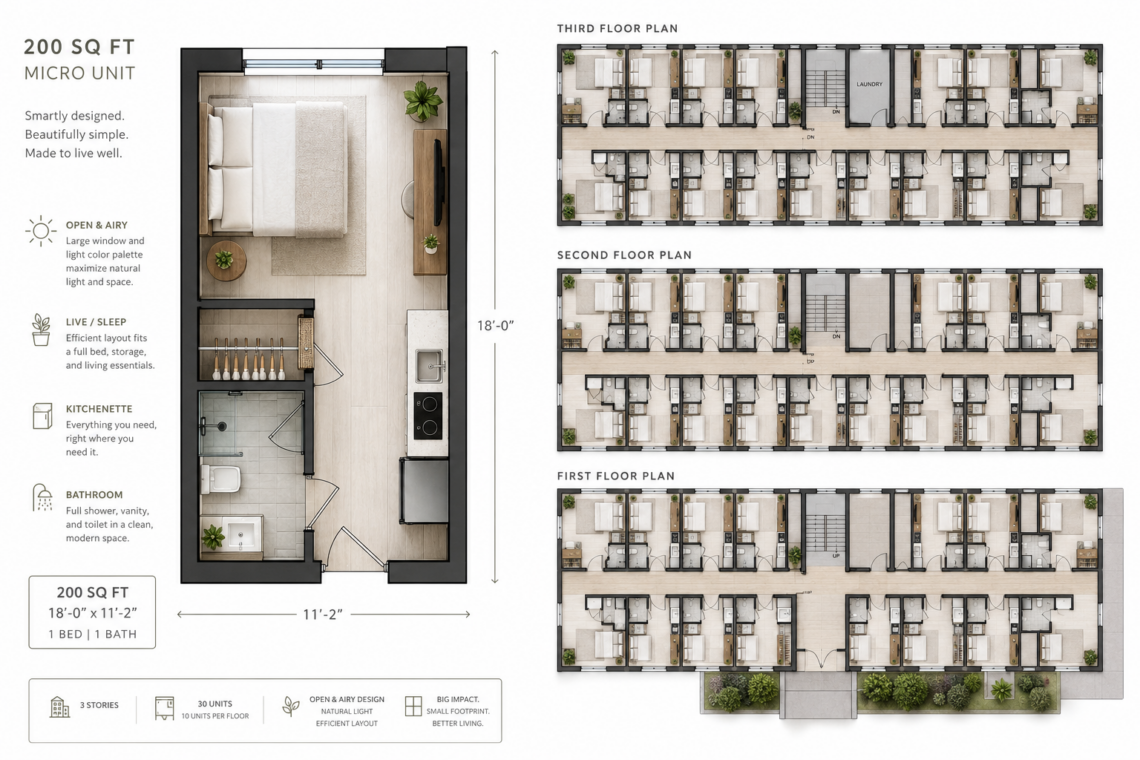
These needs can realistically be met within thoughtfully designed housing units ranging from approximately 200 square feet for individuals, with slightly larger 300 square feet accommodations for small families with children. Rent should be set at levels proportionate to income and affordable to the poor, the ultra-poor, the disabled, and those experiencing homelessness.
For example, a single-occupancy unit could potentially rent for approximately $500 per month, while a modest two-bedroom family unit might be affordable at roughly $700 per month. Existing public assistance programs—including unemployment benefits, SSI, SSDI, welfare assistance, and other aid already being distributed—could reasonably cover these costs within the framework of programs that already exist today.
This would represent a true bare-minimum housing model for society’s most vulnerable populations—one designed not merely as a temporary shelter system, but as a pathway toward stability. If implemented intelligently and managed responsibly, such a system could become largely self-sustaining while dramatically reducing homelessness and housing insecurity. Mental health services, case management, and public assistance support should be integrated into the program to help residents regain stability and improve long-term outcomes.
As for development, if large vacant parcels are unavailable, creative solutions must be considered. One example would be acquiring two adjoining residential lots and converting them into a modest 2 or 3 story building capable of housing approximately 20-30 units. The exact size and density are open to discussion, but the principle remains the same: smaller-scale buildings can integrate more naturally into neighborhoods without becoming overly intrusive.
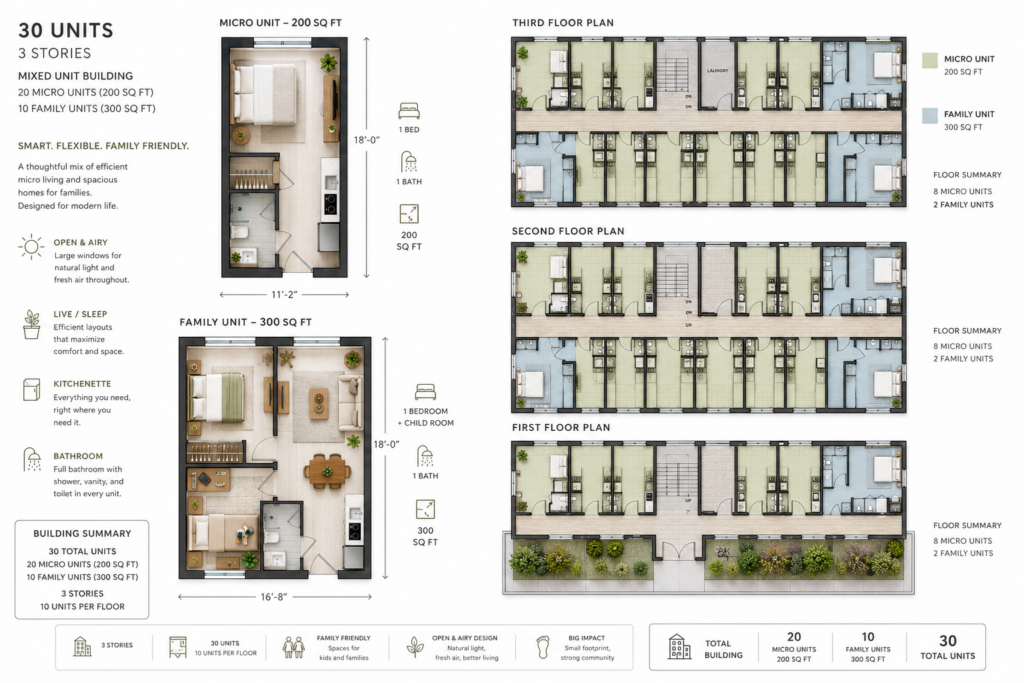
I would also advocate separating single-resident housing from family housing. This would provide a safer environment for children, reduce risks associated with vulnerable populations being mixed indiscriminately, and create healthier social environments where families and children can build community with peers in similar circumstances.
Finally, location matters. These housing developments should be situated within walking distance of grocery stores, pharmacies, and public transportation, allowing residents access to essential services, employment opportunities, and government resources without requiring vehicle ownership.
This is not a radical proposal. It is a practical, achievable, and humane solution—one rooted in realism rather than ideology. We can continue debating homelessness and housing affordability indefinitely, or we can begin building solutions that work.
This is the blueprint I am advocating for.
